
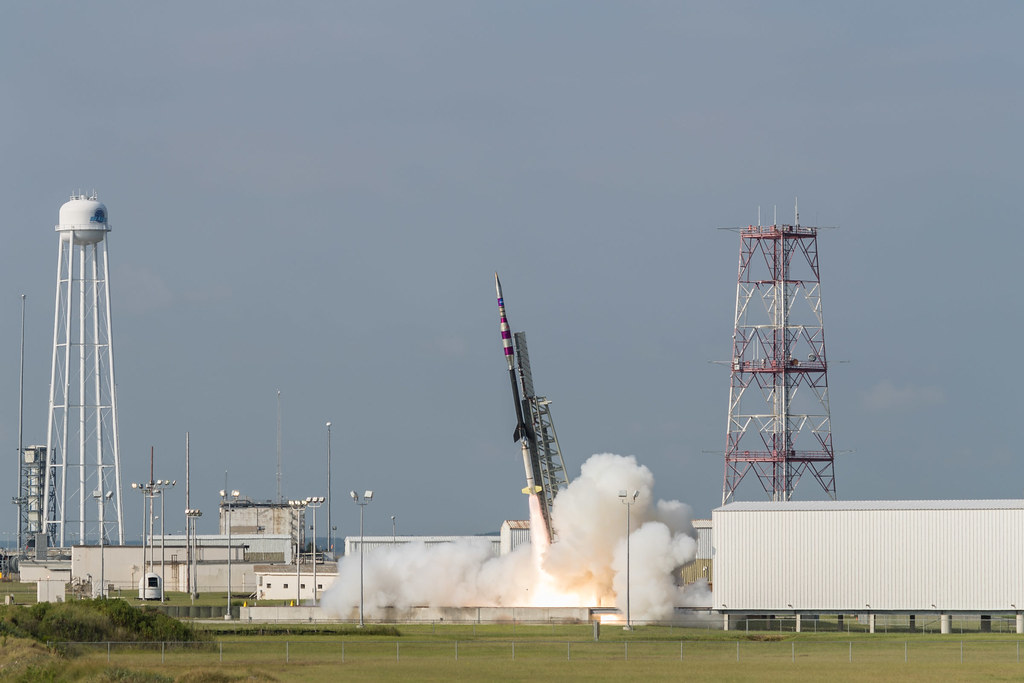

Parachute Deployment System: The Best Proven Solution for NASA
The parachute deployment system is a key component for NASA’s SkyFall Mars mission. Karman Space & Defense has been selected to develop this innovative technology, which aims to enhance the safety and reliability of landings on Mars.
Overview of NASA’s SkyFall Mission
The SkyFall mission, initiated by NASA, aims to enhance the capabilities of landing on Mars by utilizing advanced technologies. A key component of this mission is the development of a specialized parachute deployment system designed to ensure safe landings in the Martian atmosphere.
Karman Space & Defense has been selected to spearhead the creation of this innovative system, which is expected to play a critical role in the mission’s success. The SkyFall mission will test the limits of parachute technology in extreme conditions, simulating the challenges that spacecraft face during descent on Mars.
One of the primary objectives of the SkyFall mission is to gather data that will help refine the parachute deployment system for future missions. This includes:
- Testing various parachute designs to optimize performance.
- Evaluating deployment techniques to enhance reliability.
- Collecting data on atmospheric conditions to inform future landings.
The outcomes of the SkyFall mission are anticipated to provide invaluable insights that could pave the way for more efficient and safer landings on Mars, thereby advancing human exploration of the Red Planet.
Importance of Parachute Systems
The recent selection of Karman Space & Defense to develop the parachute deployment system for NASA’s SkyFall Mars Mission highlights the crucial role that parachute systems play in modern aerospace endeavors. These systems are not merely safety mechanisms; they are essential for ensuring the successful landing of spacecraft on extraterrestrial surfaces.
Parachute systems serve several important functions:
- Deceleration: They slow down the descent of spacecraft, allowing for a controlled landing.
- Stability: A well-designed parachute system helps maintain stability during descent, reducing the risk of tumbling or spinning.
- Reliability: Proven parachute technologies have undergone extensive testing, bringing a level of confidence that is vital for missions targeting distant planets.
- Cost-effectiveness: By employing efficient parachute systems, missions can reduce reliance on costly propulsion systems for landing, thus optimizing budget allocations.
NASA’s commitment to enhancing its parachute deployment system reflects the agency’s understanding of the complexities involved in atmospheric entry, descent, and landing (EDL). As technologies evolve, so too do the designs and materials used in parachute systems, making them more effective and reliable than ever before.
Karman Space & Defense’s Role
Karman Space & Defense has been selected to develop a state-of-the-art parachute deployment system for NASA’s ambitious SkyFall Mars mission. This selection underscores Karman’s longstanding expertise in aerospace technology and their commitment to advancing space exploration capabilities.
As the leading contractor for this project, Karman Space & Defense will focus on several critical aspects of the parachute deployment system:
- Innovative Design: The company aims to create a parachute system that can effectively manage the challenging conditions of Mars’ atmosphere.
- Testing and Validation: Extensive testing will be conducted to ensure the reliability and performance of the parachute under varied scenarios.
- Collaboration with NASA: Karman will work closely with NASA’s Jet Propulsion Laboratory (JPL) to align their designs with mission objectives and safety standards.
- Advanced Materials: The team will utilize cutting-edge materials to enhance durability and functionality, ensuring successful deployment during critical mission phases.
With the successful implementation of this parachute deployment system, Karman Space & Defense is set to play a pivotal role in NASA’s efforts to explore the Martian surface. The collaboration promises to push the boundaries of what’s possible in space travel.
Technological Innovations in Aerospace
In recent years, technological innovations in aerospace have significantly enhanced mission success rates, especially for complex operations like NASA’s SkyFall mission. One of the standout advancements in this field is the development of a reliable parachute deployment system that ensures safe landings on celestial bodies such as Mars.
Karman Space & Defense has been at the forefront of these innovations, leveraging cutting-edge materials and design techniques to create parachutes that can withstand the harsh conditions of space. The new deployment system incorporates advanced sensors and automated mechanisms that allow for precise deployment timing and adjustment based on atmospheric conditions.
Key features of this innovative system include:
- Smart Sensors: These sensors monitor the descent trajectory and adjust parachute deployment in real-time.
- Durable Materials: The use of high-strength fabrics ensures that the parachutes can endure extreme temperatures and pressures.
- Streamlined Design: Aerodynamic shapes minimize drag and optimize stability during descent.
As NASA continues to explore the possibilities of interplanetary missions, the advancements in parachute technology are proving to be a game-changer. The integration of this state-of-the-art parachute deployment system is expected to enhance mission safety and effectiveness significantly.
Challenges in Mars Landings
The journey to safely land on Mars is fraught with challenges, making the development of a reliable parachute deployment system crucial for NASA’s SkyFall Mission. One of the primary obstacles involves the planet’s thin atmosphere, which poses significant difficulties in slowing down spacecraft during descent. Unlike Earth, Mars has only about 1% of the atmospheric density, leading to less aerodynamic drag during parachute deployment.
Furthermore, the diverse terrain of Mars adds another layer of complexity. The presence of rocky landscapes, deep craters, and steep cliffs requires precision in landing. A parachute deployment system must be capable of adapting to these varied conditions, ensuring a safe touchdown regardless of the landing site.
NASA’s engineers face additional challenges in designing a system that can withstand the harsh Martian environment. This includes extreme temperatures, dust storms, and high radiation levels, all of which can affect the performance of parachutes.
To address these issues, rigorous testing and simulations are essential. Karman Space & Defense, tasked with developing the parachute deployment system, is focusing on advanced materials and technologies that can endure the unique challenges of Mars landings. The success of this system is pivotal to the overall mission, as it ensures that the payload can land safely and operate effectively on the Martian surface.
Future of Space Exploration
The future of space exploration is increasingly intertwined with advancements in parachute deployment systems, especially as missions to other planets become more ambitious. NASA’s SkyFall mission exemplifies this trend, as it seeks to improve landing technologies on Mars, where the atmosphere poses unique challenges.
As missions venture farther into the solar system, the reliability and efficiency of parachute systems will become crucial. Innovations in materials and design are paving the way for safer and more effective deployments. The collaboration between NASA and Karman Space & Defense signifies a commitment to pushing the boundaries of what is possible in aerospace technology.
Moreover, the insights gained from the SkyFall mission will not only benefit Mars exploration but also have implications for future lunar landings and other planetary missions. By refining parachute deployment systems, NASA aims to enhance the safety and success rate of landings, which are critical for both robotic and crewed missions.
As we look to the stars, the advancements in parachute systems will play a pivotal role in ensuring that future explorers can safely navigate new worlds. With ongoing research and development, the prospects for extraordinary discoveries and scientific breakthroughs in space are brighter than ever.
By NASA Goddard Photo and Video via Openverse